

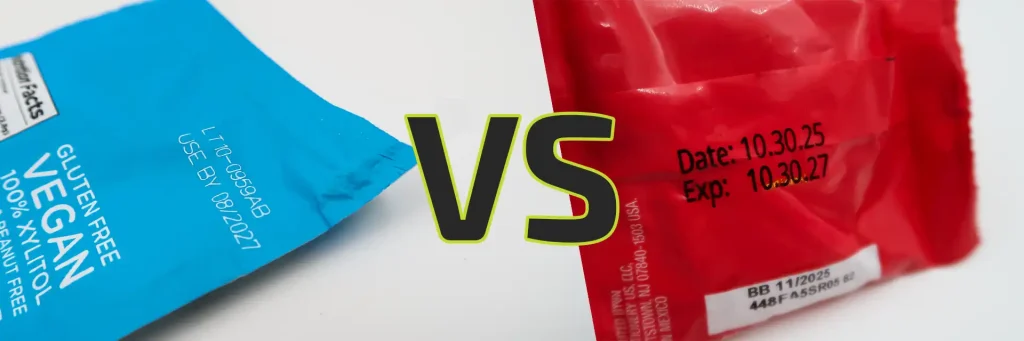
Laser vs Inkjet: What You Need to Know
Choosing between laser and inkjet isn’t always simple. Both technologies are proven, both support traceability, and both fit a wide range of applications across consumer goods and industrial manufacturing. But each one offers different strengths, costs, and performance advantages. This guide brings clarity to the decision by answering the questions plant teams, engineers, and production managers ask most when comparing laser and inkjet marking.For a general overview of both technologies, you can read our original Laser vs. Inkjet article. This Q&A takes a deeper look at the questions teams ask when choosing between them.
Below is a new, practical Q&A that breaks down real production considerations, so you can understand when each technology makes sense.
Common Questions About Laser and Inkjet Marking
Question 1. What’s the real difference between laser and inkjet, and what does that mean for day-to-day production?
Laser systems do not use inks or solvents, which removes a recurring consumable cost. Inkjet printers do require consumables, but they generally have a lower upfront investment. Long-term cost differences depend on production volume, code density, runtime, and how often lines change over.
Laser also tends to require less maintenance because it has fewer moving parts. Inkjet systems need regular but simple upkeep — primarily keeping printheads clean and ensuring consistent ink flow.
Both technologies support high uptime, just in different ways. Laser achieves this through low maintenance needs, while inkjet maintains uptime through fast message changes, quick recoveries when adjustments are needed, and simple operator tasks.
The most cost-effective choice depends on your production priorities. Laser is often the better long-term value when you want to eliminate consumables, produce permanent marks, or support high throughput. Inkjet becomes the more economical choice when a lower initial investment matters more and when ongoing consumables are expected or easy to manage.
Question 2. Which technology performs better for high-speed lines, frequent code changes, and different packaging materials?
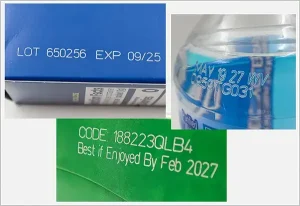
liquid ink directly to the surface of the substrate. While both technologies print high-quality codes, they behave differently on the production floor.
Laser marks do not smear, fade, or rub off, which makes them reliable in environments with handling, moisture, chemical exposure, or abrasion. Inkjet marks can be just as clear, but performance depends heavily on selecting the correct ink for the substrate and environmental conditions.
Both technologies work across a broad range of packaging materials. Inkjet achieves versatility by switching inks, while laser uses different laser types (CO2, UV, Fiber) to match the substrate’s reaction to light. For operators, laser offers long-lasting codes with minimal daily attention, while inkjet provides quick code changes and maximum flexibility across SKUs, materials, and production requirements.

Question 3. How do laser and inkjet compare in total cost of ownership, including consumables, maintenance, and uptime?
Both laser and inkjet can run at high production speeds. Inkjet is particularly strong when codes change frequently because message adjustments are instant and require no mechanical alterations. It also supports a wide material range as long as the correct ink chemistry is used.
Laser performs extremely well on materials that react consistently to light — including plastics, coated paper, cardboard, metals, and flexible films. It produces crisp, high-contrast marks even at high line speeds, as long as the substrate is suitable for laser interaction.
The best choice depends on your production environment. If your lines run one primary material at a steady speed, laser provides consistency and long-term reliability. If you frequently switch packaging types or change codes throughout the shift, inkjet offers faster, more adaptable performance.
Question 4. When should a manufacturer choose laser over inkjet, and when does inkjet make more sense?
Choose laser when:
- You need permanent, abrasion-resistant codes.
- Your facility operates in clean or regulated environments where eliminating inks is an advantage.
- Long-term readability and traceability matter.
- You can absorb the higher initial investment to eliminate consumable costs over the life of the system.
Laser is common in beverage, pharma, personal care, electronics, and other industries where durability and clarity are non-negotiable.
Choose inkjet when:
- You run many SKUs, short runs, or seasonal/promotional codes.
- You require specialized ink chemistries (food-grade, UV-readable, fast-drying, etc.).
- Your substrates vary widely across plastics, cartons, metal, films, wood, and corrugate.
- Lower upfront cost is a priority.
Inkjet remains the go-to for date codes, lot codes, and variable data across high-mix production environments.
Both technologies are effective. The right choice ultimately depends on production needs, durability requirements, operational flexibility, and available capital.
Question 5. How easily do modern laser and inkjet systems integrate with production lines, and what role do CO2, UV, and Fiber lasers play in choosing the right setup?
Both inkjet and laser integrate easily with modern production equipment. Inkjet typically installs with minimal additional requirements. Laser systems may require added safety components depending on the application, but integration itself is straightforward.
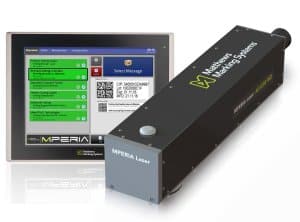
A platform like MPERIA® allows operators to control either technology from one interface, simplifying training, message management, and line-wide code consistency.
Laser performance varies by laser type:
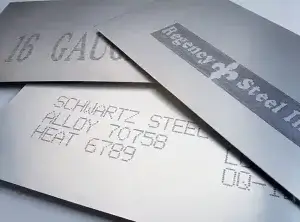
- CO2 Laser: Best for coated paper, cardboard, PET, glass, and many consumer packaging materials.
- UV Laser: Ideal for plastics and flexible films that require high contrast with low heat impact.
- Fiber Laser: Suited for metals, rigid plastics, and industrial components requiring durable, permanent marks.
If inkjet is the better fit for your operation, options like our V-Series DOD Inkjet Printer deliver durable, high-quality codes for metals, wood, plastics, corrugate, and more. You can also explore inkjet solutions such as our L-Series Thermal Inkjet Printer, CT1000 Thermal Inkjet Printer, and Axian AX1000 Inkjet Printer for applications that require fast message changes and broad substrate compatibility.
Whether you choose laser or inkjet, integration is straightforward, and the right controller can make both options equally accessible for operators.
Choosing the Right Technology
Every plant has different priorities. If durability, cleanliness, and long-term consistency matter most, laser may be the stronger fit. If flexibility, broad substrate coverage, or quick code changes are a priority, inkjet may be the better option. Both technologies are proven, and the right choice depends on your materials, line conditions, and production goals. Reach out today to explore all available marking and coding systems and find the best fit for your operation,