Improve Product Traceability
Support Quality Control Programs: Connect products to manufacturing records and production batches
Improve Inventory Visibility: Simplify product tracking throughout storage, distribution, and delivery
Yes. Integration reduces manual entry errors and supports traceability. Matthews solutions are commonly integrated with upstream grading or inventory systems so marks adjust automatically by product.
Consistency requires centralized job management, controlled message changes, and synchronized data. Matthews systems are used in multi line and multi plant environments to reduce operator variation and rework.
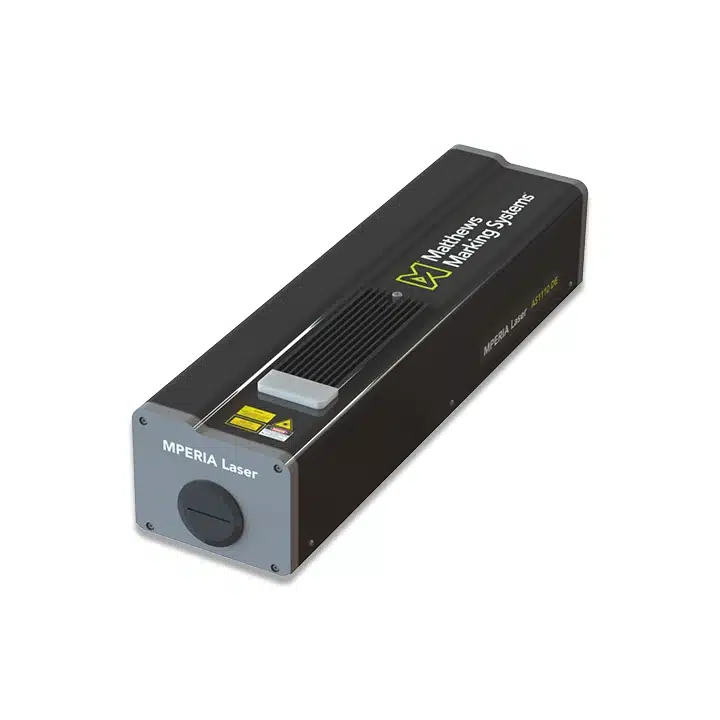
Laser marking can deliver permanent marks without consumables, but it introduces considerations such as extraction, fire risk, and variable contrast depending on wood composition and glue content. Matthews recommends sample testing and appropriate safeguards when laser is evaluated for wood substrates.
TIJ is typically considered when higher resolution is required, such as small text or codes on smoother panels. It is less tolerant of dust and surface variation, so environmental control and substrate consistency are more important. Matthews evaluates whether conditions support reliable TIJ operation before recommending it.
DOD is widely used on wood because it tolerates rough surfaces, dust, and wide print gaps. It is well suited for large characters, logos, and variable data. The trade off is lower resolution compared to TIJ. Matthews matches nozzle size and ink volume to substrate and mark requirements.
Defect marking prioritizes speed and visibility over appearance. Large, bold characters or symbols are typical. Matthews systems support rapid message changes tied to upstream detection without stopping the line.
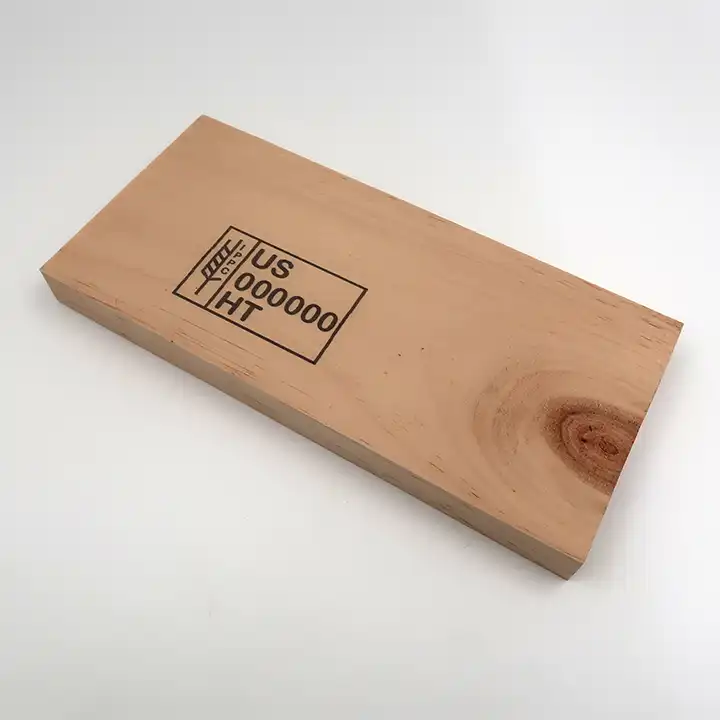
Yes. Certification marks, logos, and compliance information are commonly applied inline to lumber, pallets, and panels. Placement and durability depend on downstream handling and inspection requirements. Matthews validates mark quality under real handling conditions.
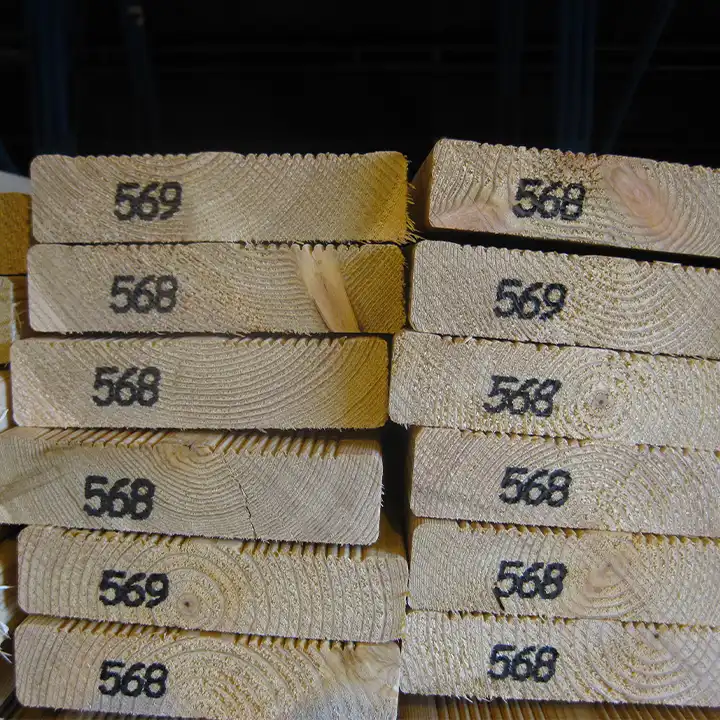
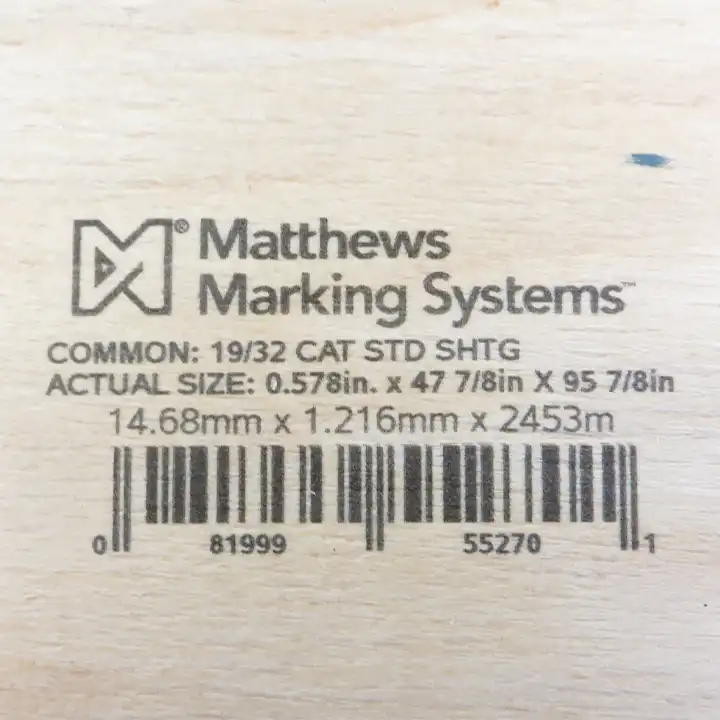
Grades, mill IDs, and structural ratings must remain legible and consistently placed. These marks often vary by product, length, or grade. Matthews systems integrate with mill data so the correct information is applied automatically without manual re entry.
Yes. Cold temperatures can slow ink flow, while heat can accelerate drying or increase misting. Lumber mills and panel plants often experience wide seasonal swings. Matthews evaluates operating temperature ranges and selects inks and hardware proven to perform consistently across those conditions.
Vibration can distort characters and cause inconsistent placement. Matthews accounts for mounting rigidity, print distance, and encoder feedback to stabilize mark quality on high vibration lines.
Dust can clog nozzles, contaminate optics, and increase maintenance if systems are not designed for it. Matthews wood marking solutions are used in dusty lumber and panel environments and are selected to reduce manual cleaning and unplanned downtime. Enclosure, placement, and service intervals are considered part of the system design.
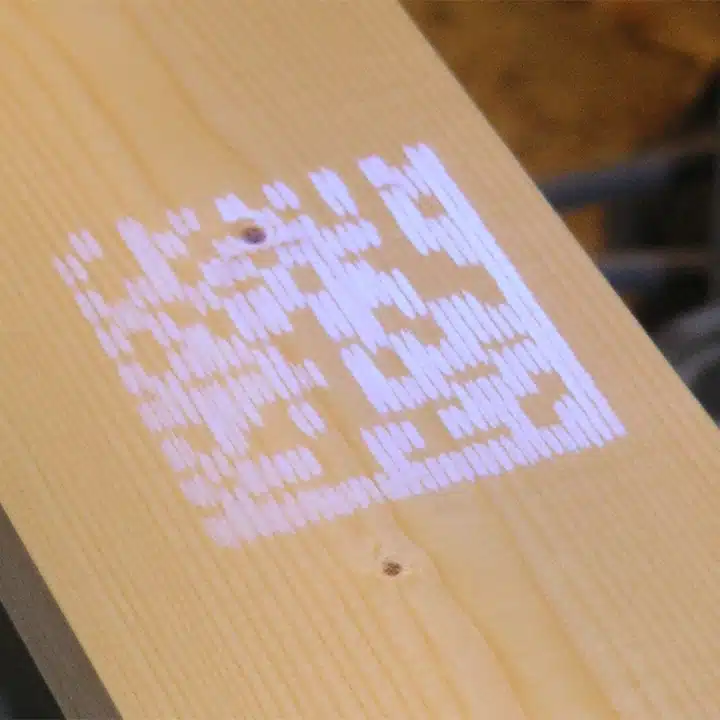
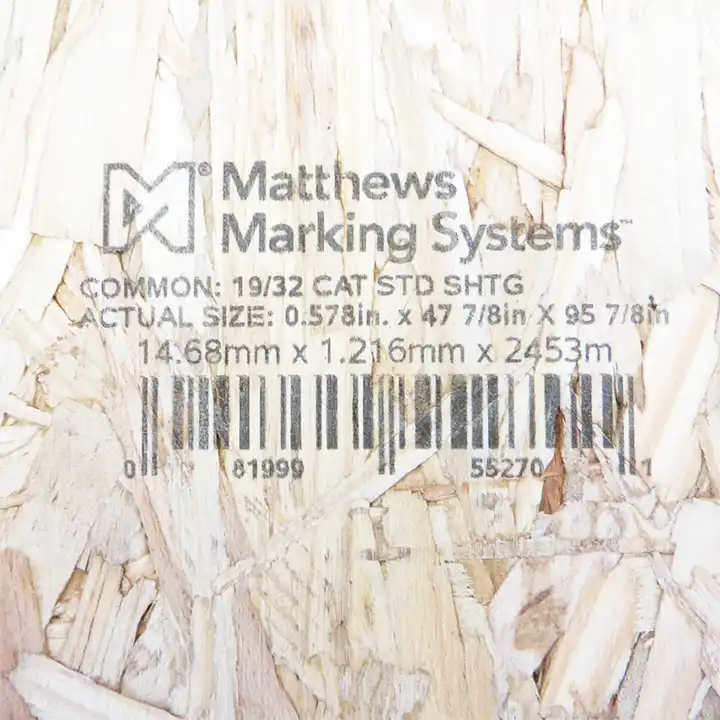
Yes, with the right conditions. Success depends on surface consistency, contrast, and print resolution. Rough or strand based substrates limit how small codes can be before edge definition degrades. Matthews typically recommends larger code sizes, controlled ink laydown, and validation testing to confirm scan reliability at production speed.
Fading depends on exposure to UV, moisture, abrasion, and downstream handling. Internal tracking marks may not require the same durability as export, certification, or compliance marks. Matthews aligns ink chemistry, mark size, and permanence to the application so durability matches the requirement without unnecessary complexity.
Contrast depends on ink color, laydown, and background variability. Dark or stained woods often require light colored or pigmented inks and larger characters. Matthews evaluates contrast at the viewing distance that matters on the production floor, not under ideal conditions. Testing on actual substrate remains the most reliable way to confirm readability.
Wood fibers pull ink along the grain, particularly on rough or low density substrates. Excess ink volume or very small characters increase bleed. Reducing nozzle size, increasing character height, or using inks formulated for porous substrates can help control spread. Matthews focuses on consistent readability rather than cosmetic perfection.
Treated lumber and kiln dried products can contain chemicals or reduced moisture levels that change how ink wets the surface. Some treatments repel certain inks, while others increase bleed or slow drying. Matthews evaluates inks and print parameters on treated substrates to confirm adhesion, contrast, and dry time before recommending a production configuration.
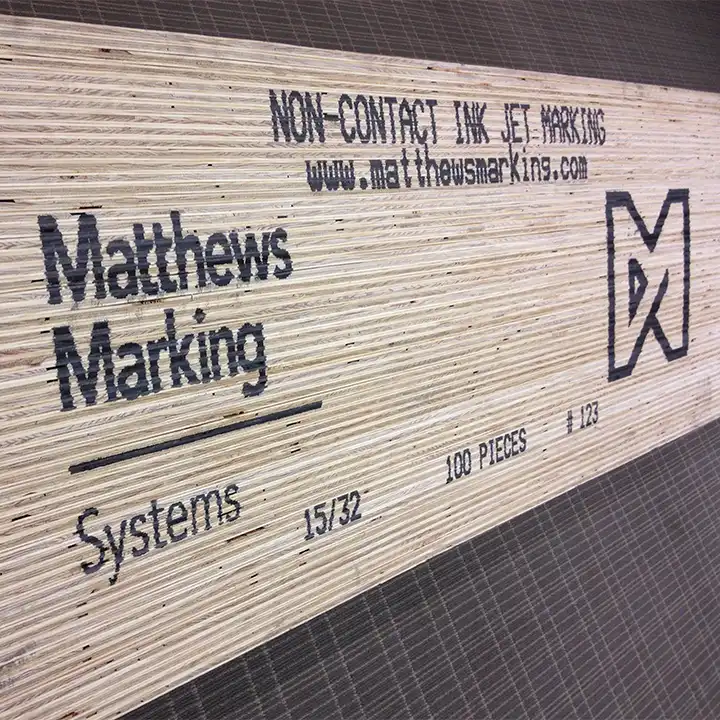
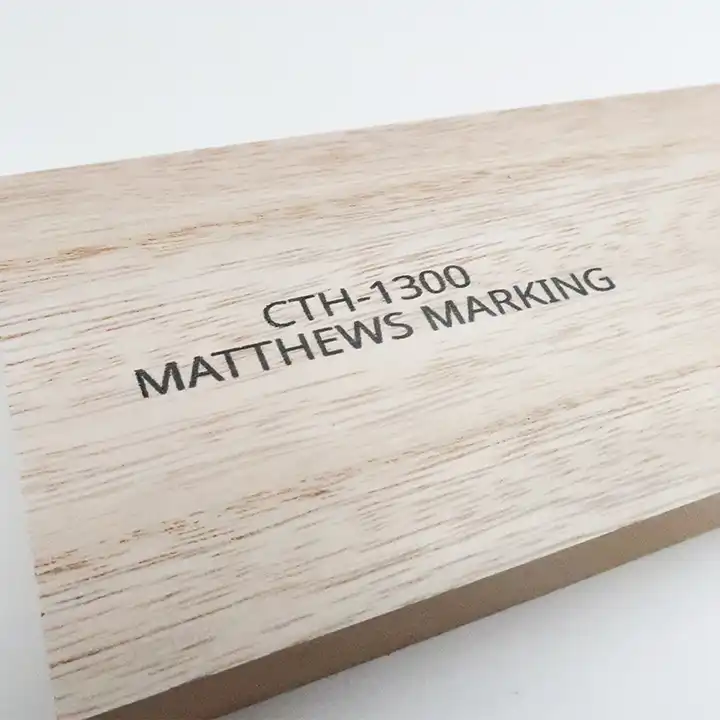
Planed lumber generally produces better contrast and sharper edges because the surface is flatter and less absorbent. Rough sawn lumber absorbs more ink and increases character spread. This does not prevent reliable marking, but it makes nozzle size, ink selection, and character height more critical. Matthews accounts for surface finish when configuring print resolution and ink laydown to reduce weak or blurry marks.
Pallets and crates introduce recycled wood, mixed species, nail heads, surface damage, and wide gaps. Marks often need to be readable from a distance and survive rough handling. Large character marking is common, but dust, vibration, and inconsistent surfaces increase the risk of broken or incomplete characters. Matthews systems used in pallet environments are selected to tolerate debris and vibration while maintaining legibility and minimizing operator intervention.
Dimensional lumber is typically rough, fibrous, and inconsistent from board to board. OSB and plywood are engineered panels with resins, glue layers, and compressed strands or veneers. These differences affect ink absorption, edge definition, and contrast. Lumber often absorbs ink quickly and unevenly, while OSB and plywood may repel or spread ink in resin or glue heavy areas. Matthews evaluates substrate density, surface texture, and treatment to select printhead type, ink formulation, and character size that remain readable across normal production variability.
Our experts are available to assure that your next printing solution maximizes efficiency, enhances quality, and limits downtime. Contact us to get a quote, request samples, schedule a demonstration, or receive additional product information.