

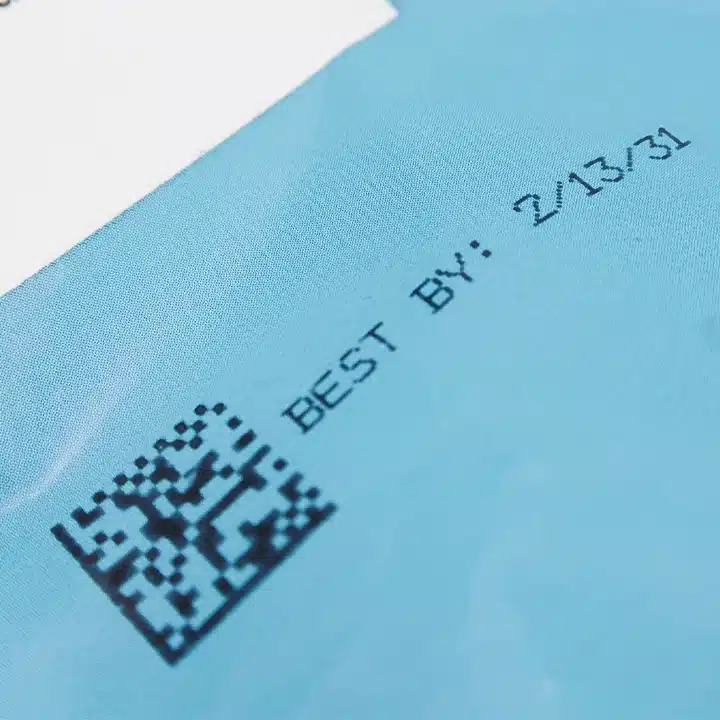
Why Code Assurance Is Becoming a Manufacturing Priority
In modern manufacturing, product codes do far more than identify what’s inside a package. They connect products to traceability systems, enable automated distribution, and provide retailers with the data needed to move products efficiently through the supply chain.
As supply chains become more data-driven, manufacturers are facing a new challenge: printing a code is no longer enough. The real question is whether that code can be trusted.
Unreadable barcodes, incorrect lot data, or inconsistent formatting can create serious downstream issues. Distribution centers rely on fast, reliable scans to keep products moving, and quality audits increasingly examine whether coding processes are controlled and verifiable.
To meet these expectations, many manufacturers are shifting toward print-and-verify workflows designed to ensure every code leaving the line meets quality and compliance standards.
The Industry Shift Toward Higher Barcode Standards
The push for stronger code assurance is accelerating with initiatives like GS1 Sunrise 2027, which encourages the adoption of two-dimensional barcodes across retail and manufacturing environments.
Unlike traditional linear barcodes, 2D codes such as QR codes or DataMatrix symbols can store significantly more information. Instead of containing only a product identifier, these codes may also include lot numbers, expiration dates, serial numbers, and other production data.
This expanded data capacity improves traceability and supply chain visibility, but it also raises the bar for print quality. Higher-density codes require precise marking, strong contrast, and consistent placement to remain readable across automated scanning systems.
For manufacturers, this shift means coding strategies must evolve from simply applying codes to ensuring every code printed on the line is readable, accurate, and compliant.

What Is a Print-and-Verify System?
Traditional coding workflows typically involve printing a barcode and relying on occasional manual inspection to check quality. While this approach may catch obvious issues, it can still allow defective codes to pass through production.
A print-and-verify system adds an additional layer of protection by validating each code immediately after it is applied.
The process generally works as follows:
1. A marking system prints the barcode or data code on the product or package.
2. A vision system scans the code in real time.
3. The system evaluates readability and formatting against verification standards.
4. Production continues if the code meets quality requirements.
5. If the code fails verification, the system can trigger an alert or reject the product.
This real-time inspection prevents large batches of unreadable or incorrect codes from moving further down the production process.
Why Retailers and Auditors Care About Barcode Quality
Reliable barcode performance is critical for the speed and accuracy of modern supply chains. Retail distribution centers depend on automated scanning systems to process products quickly and efficiently.
When codes fail to scan consistently, it can lead to delays, rejected shipments, and manual data entry.
Retailers and auditors are therefore placing greater emphasis on code quality and traceability. Audits increasingly focus on whether manufacturers have controlled, repeatable processes for generating product codes.
Verification systems help demonstrate that coding is not left to chance. Instead, each code is validated against quality standards before it leaves the production line, reducing the risk of costly errors later in the supply chain.
Building a Reliable Print and Verify Workflow
A successful code assurance strategy requires coordination between data management, marking technology, and verification systems.
Production data such as lot numbers, expiration dates, and product identifiers typically originate from enterprise systems like ERP or MES platforms. This information must then be managed and distributed across multiple production lines without introducing errors.
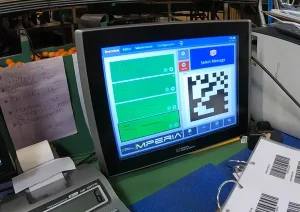
Centralized control platforms such as MPERIA® help manufacturers manage coding messages from a single interface, ensuring consistent formatting and reducing manual data entry across production lines.
Once the message is deployed, the marking system applies the code to the product or package. After printing, integrated vision systems inspect the code to confirm it meets readability and formatting requirements.
If a code fails verification, the system can trigger alerts or reject the product immediately, helping prevent defective codes from reaching packaging or distribution.
Choosing the Right Marking Technology
Achieving reliable verification starts with selecting the right marking technology for the application.
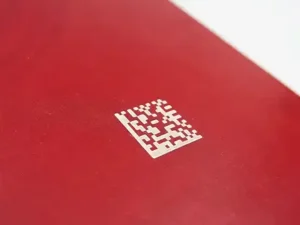
Laser marking systems are commonly used when permanent, high-contrast codes are required on materials such as plastics, metals, or flexible films.
Industrial inkjet printers provide high-resolution codes on packaging materials like cartons, labels, and coated surfaces.
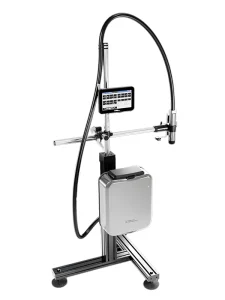
For demanding industrial environments, technologies such as MPERIA Axian AX1000 Inkjet (XIJ) offer reliable coding performance at high production speeds.
In some cases, labeling solutions such as automatic labeling systems like the MPERIA A-Series are used to apply pre-printed labels containing barcodes or variable data where direct marking may not be practical.
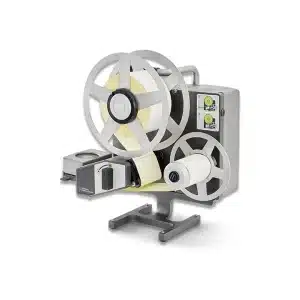
Selecting the appropriate marking technology helps ensure the printed code meets quality standards before verification even begins.
Preparing for the Transition to 2D Barcodes
With the industry preparing for wider adoption of 2D barcodes under GS1 Sunrise 2027, many manufacturers are evaluating whether their current coding systems are ready for higher-density data formats.
Key questions include:
- Can current printers produce high-resolution 2D codes?
- Do verification systems measure barcode quality in real time?
- Is message control centralized across production lines?
- Can coding systems integrate with enterprise data sources?
Organizations that begin preparing now can adopt new barcode standards more smoothly while improving traceability and operational efficiency.

Confidence in Every Code
Product coding has become a critical link between manufacturing operations, supply chain automation, and regulatory compliance.
By combining reliable marking technologies, centralized message management, and real-time verification systems, manufacturers can ensure that every code leaving the line is readable, accurate, and ready for the next step in the supply chain.
As traceability expectations continue to grow, designing effective print-and-verify workflows helps manufacturers maintain confidence in every code they produce.