

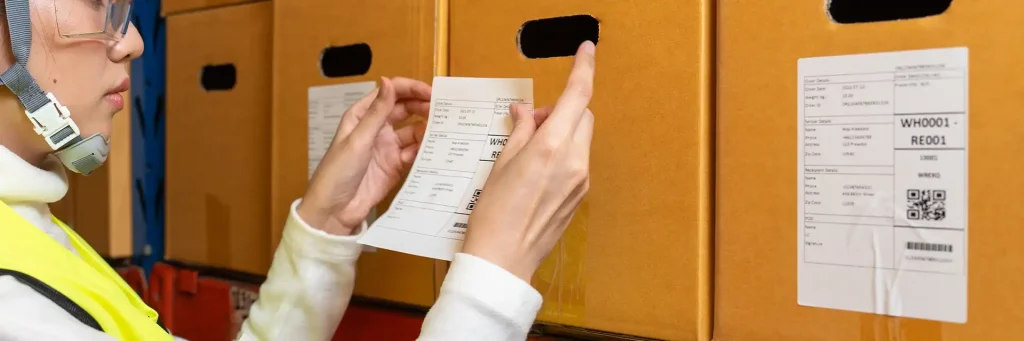
When to Replace Case Labels with Direct Printing
If you’re running case coding today, there’s a good chance you’re using labels. They’re familiar, consistent, and easy to work into most production lines.
But as your operation grows, labeling can start adding extra steps, more materials to manage, more equipment to maintain, and more chances for small interruptions to slow things down.
That’s where direct marking comes into the picture.
Instead of printing onto a label and applying it, systems like inkjet print directly onto the case. There are no separate materials and no second step in the process. The question isn’t whether one method is better than the other; it’s whether your current setup is still the best fit for how your line is running today.
Why Labels Became the Default for Case Coding
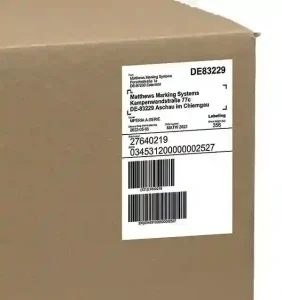
Labels became the standard because they were reliable and easy to implement.
They give you a consistent surface to print on, which helps maintain barcode readability across different case materials. That reliability matters, especially in environments where scanning accuracy is critical.
They’re also flexible. You can include branding, product details, and variable data without changing your overall setup. If you’re managing multiple SKUs or frequent changeovers, that flexibility makes day-to-day operations easier. Because of that, labeling became a low-risk choice, and for many operations, it still is.
Where Labeling Starts to Create Friction
The challenges with labeling usually don’t show up all at once. They build over time as production increases and systems expand.
One of the first things you start to notice is the ongoing effort around consumables. Labels, ribbons, and adhesives all need to be stocked, tracked, and replaced. On one line, that might be manageable. Across multiple lines, it becomes something your team has to stay on top of every day.
There are also issues that come from the labels themselves.
In some environments, labels don’t always stay where they’re supposed to. They can lift, peel, or fall off cases during handling. When that happens, you’re not just dealing with a missing code; you’re also dealing with labels sticking to conveyors, equipment, or the floor, which creates cleanup and potential safety concerns.
Downtime adds another layer. Label rolls run out, applicators need adjustment, and jams happen. Each stop may be small, but over the course of a shift, they add up. The more lines you’re running, the more those interruptions start to impact throughput.
Then there’s the mechanical side. Print-and-apply systems introduce additional components that need to be maintained and calibrated. As those systems age or run in tougher conditions, keeping everything consistent can take more effort.
None of this means labeling doesn’t work. In many operations, it still performs well. But as things scale, these added layers can start slowing you down in ways that aren’t always obvious at first.
What High-Resolution Inkjet Changes
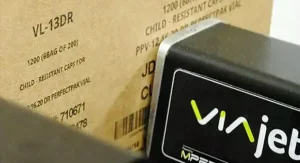
Direct printing with high-resolution inkjet removes several steps from the labeling process.
Instead of printing onto a label and applying it, the system prints directly onto the case. That eliminates the need for label stock, ribbons, and applicators, along with the coordination required to keep those components running.
The biggest change is operational, fewer steps, fewer materials, and less to manage on the line.
A common question with direct print is whether the marks are clear enough. Modern high-resolution inkjet systems are designed to produce readable text, barcodes, and variable data directly on corrugate. When properly set up for the substrate and environment, they can meet the same scanning and readability requirements used in distribution and retail.
That said, print quality still depends on factors like case material, surface consistency, and contrast. Inconsistent substrates or poor setup can affect results, which is why testing and validation are important before making a switch.
Placement also becomes more consistent. Without an applicator involved, there are fewer variables that can affect where and how the code is applied. This helps reduce issues like misapplied labels or skewed barcodes.
The result is a more direct process with fewer points of failure.
Where Labeling Still Makes Sense
Even with advances in direct print, labeling continues to be the right choice in certain situations. The key is understanding where it adds value instead of complexity.
1. When print quality needs to be tightly controlled
Labels provide a clean, uniform surface. If your packaging varies in texture or color, a label can help maintain consistent barcode readability and visual quality.
2. When flexibility is a priority
If you’re running multiple SKUs or frequent product changes, flexibility becomes critical.
Labels have traditionally made this easier. Pre-printed designs combined with variable data allow you to switch formats without changing your core setup.
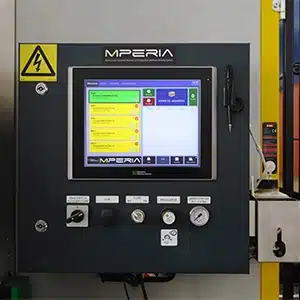
That same flexibility can also be achieved with direct print when messages are managed digitally across the line. Systems like MPERIA® support both labeling and direct marking, allowing you to update codes, formats, and data without stopping production.
3.When packaging isn’t ideal for direct print
If your packaging doesn’t consistently accept ink, results can vary. In those cases, labeling helps avoid issues with low contrast or unreadable codes.
4. When traceability requirements are strict
If barcode accuracy is critical in your operation, labels offer a reliable way to meet scanning requirements, especially in distribution and retail environments.
5. When more information needs to be displayed
If you need to include detailed product information, branding, or multiple barcodes, labels provide the space and layout flexibility to do it clearly
A Simpler Approach to Case Coding
At its core, the shift from labeling to direct print is about reducing friction.
Fewer consumables to manage.
Fewer mechanical components to maintain.
Fewer interruptions during production.
For the right application, high-resolution inkjet simplifies the process without sacrificing code quality or readability.
That doesn’t make labeling obsolete. It just means it’s no longer the only practical option.
Conclusion
Labels have been the standard for case coding for years, and in many applications, they still make sense. But as production demands increase, the extra steps involved in labeling can start to impact efficiency in ways that aren’t always obvious at first.
High-resolution inkjet offers a more direct approach. By printing directly onto the case, it removes layers from the process and reduces the ongoing effort required to keep lines running.
The decision comes down to your operation, your volume, your materials, and your tolerance for complexity. If labeling is starting to slow things down, it may be worth taking a closer look at what a direct print approach could change.
If you want to explore both options further, you can visit our Labeling page to see how each approach fits different applications.