

Laser Focused Guidance: Fiber, UV, and CO₂ Lasers Explained
When it comes to selecting the right laser marking technology for your products, understanding the differences between Fiber, UV, and CO₂ lasers is crucial. Each type of laser has unique characteristics, applications, and advantages that make them suitable for specific materials and industries. Here’s a breakdown of the three most common laser types: Fiber, UV, and CO₂, and where each one fits best.
Fiber Lasers
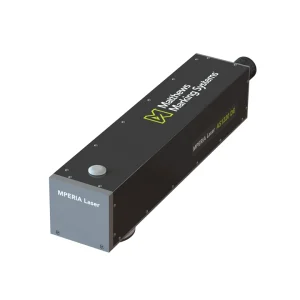
Known for their precision and durability, fiber lasers are widely used for metal marking. Operating around 1064 nm, they emit a focused, high-power beam ideal for deep marks, engraving, ablation, foaming and annealing. Their compact, low-maintenance design makes them a dependable option for fast-paced production environments.
Common applications include marking steel, aluminum, brass, and plastics commonly in aerospace, electronics, automotive, and manufacturing. Fiber lasers produce clean, durable codes like barcodes, serial numbers, and logos, with minimal heat impact.
For marking on flexible films, a specialized type known as a fiber film laser is often used. These lasers are engineered to provide precise, low-impact marking on film-based packaging materials without causing distortion or burn-through.
In the consumer-packaged goods industry, fiber lasers are increasingly used for marking the base of aluminum cans, replacing CIJ printers that rely heavily on consumables and high-speed throughput. This application is particularly beneficial for beverage manufacturers, as fiber lasers offer high-speed processing without the downtime associated with CIJ printers.
Learn more about our fiber laser solutions for high-speed metal marking.
UV Lasers: Precision Without the Heat
When you’re working with sensitive materials like plastics, films, or glass, too much heat can ruin everything. That’s where UV lasers come in.
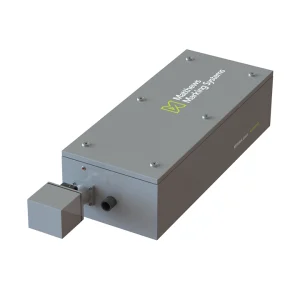
Operating at a short wavelength around 355 nm, UV lasers mark with “cold light,” meaning they don’t generate the heat that traditional lasers do. This makes them perfect for fine-detailed applications where even slight material damage isn’t an option.
You’ll find UV lasers in industries like electronics, medical, and semiconductors—anywhere intricate markings matter. They’re a go-to for serial numbers on medical tubing, circuit board codes, or micro-marking delicate plastics.
In the food and beverage industry, UV lasers are ideal for flexible films like PE, PET, or OPP5. They deliver high-contrast, damage-free codes—used for packaging in meat processing, snacks, and other goods sealed in plastic. UV lasers are also often used as a replacement for thermal transfer overprinters (TTO), offering a cleaner, more reliable coding method without the need for ribbons or frequent maintenance.
See how our UV laser systems offer a cleaner alternative.
CO₂ Lasers
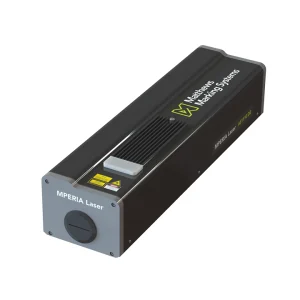
CO₂ lasers are best suited for non-metallic and organic materials. Running at 10.6 µm, they’re commonly used for marking cardboard, wood, glass, acrylic, leather, and paperboard. These lasers are frequently seen in packaging, signage, and woodworking environments.
While they’re not ideal for marking bare metals, CO₂ lasers can be used on coated or painted surfaces with the right setup. Their strength lies in creating consistent marks at high speeds across a wide range of packaging substrates.
In the CPG industry, CO₂ lasers are commonly used for marking organic materials such as paper, board, and glass. They are effective for marking packaging materials and products, ensuring high-speed, permanent marking for packaging and products.
Explore our CO₂ laser options for packaging materials.
Pro-tips to pick the right laser
- Request samples. Test the laser on your actual product to assess mark quality.
- Compare technologies. Consider mark quality, footprint, integration, maintenance, and cost.
- Plan ahead. Choose a solution that can scale with your future production needs.
Summary
Fiber lasers are best for metals and high-speed, high-precision industrial marking. UV lasers are ideal for heat-sensitive and intricate applications, such as medical devices and micro-marking. CO₂ lasers are most effective for non-metallic and organic materials like wood, leather, and glass. In the CPG industry, fiber lasers are used for marking aluminum cans, UV lasers for flexible film materials, and CO₂ lasers for organic materials. By understanding the unique characteristics and applications of each laser type, buyers can select the right laser marking technology to meet their specific needs.
CO₂ Laser
Best For
Organics and plastics, including PET.
Substrate Type
Paper, cardboard, foils, PET, and wood.
Industry Type
Food & beverage, tobacco, personal care, and packaging.
Marking Quality
Good marking quality with strong contrast and clean edges.
Fiber Laser
Best For
Metals and high-density plastics.
Substrate Type
Aluminum, stainless steel, HDPE, and PVC.
Industry Type
Automotive, aerospace, electronics, FMCG, and tools.
Marking Quality
Excellent marking quality with high contrast and options for deep or light marking.
UV Laser
Best For
Sensitive materials and precision marking.
Substrate Type
Glass, transparent plastics, silicon, multilayer films, and flexible films.
Industry Type
Pharmaceuticals, cosmetics, electronics, and medical devices.
Marking Quality
Very high marking quality with precise results and a minimal heat-affected zone.
Ready to find the right laser for your application?
Explore our full lineup of Fiber, UV, and CO₂ systems to see which MPERIA® Laser is the best fit for your operation