
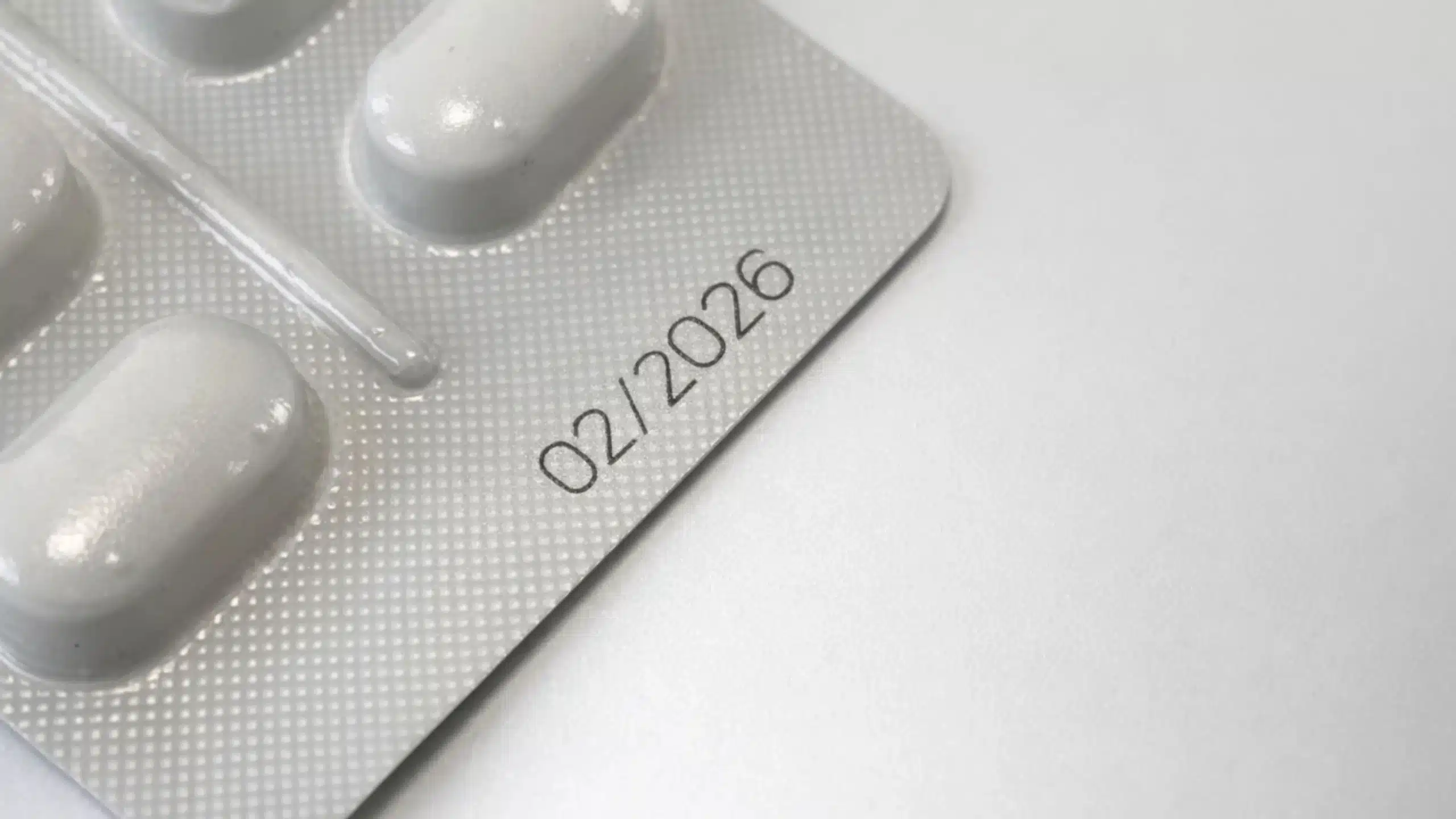
Laser Marking in medicine & pharma
UV laser marking with the MPERIA® system - precise, gentle, durable. Ideal for the medical and pharmaceutical industries.
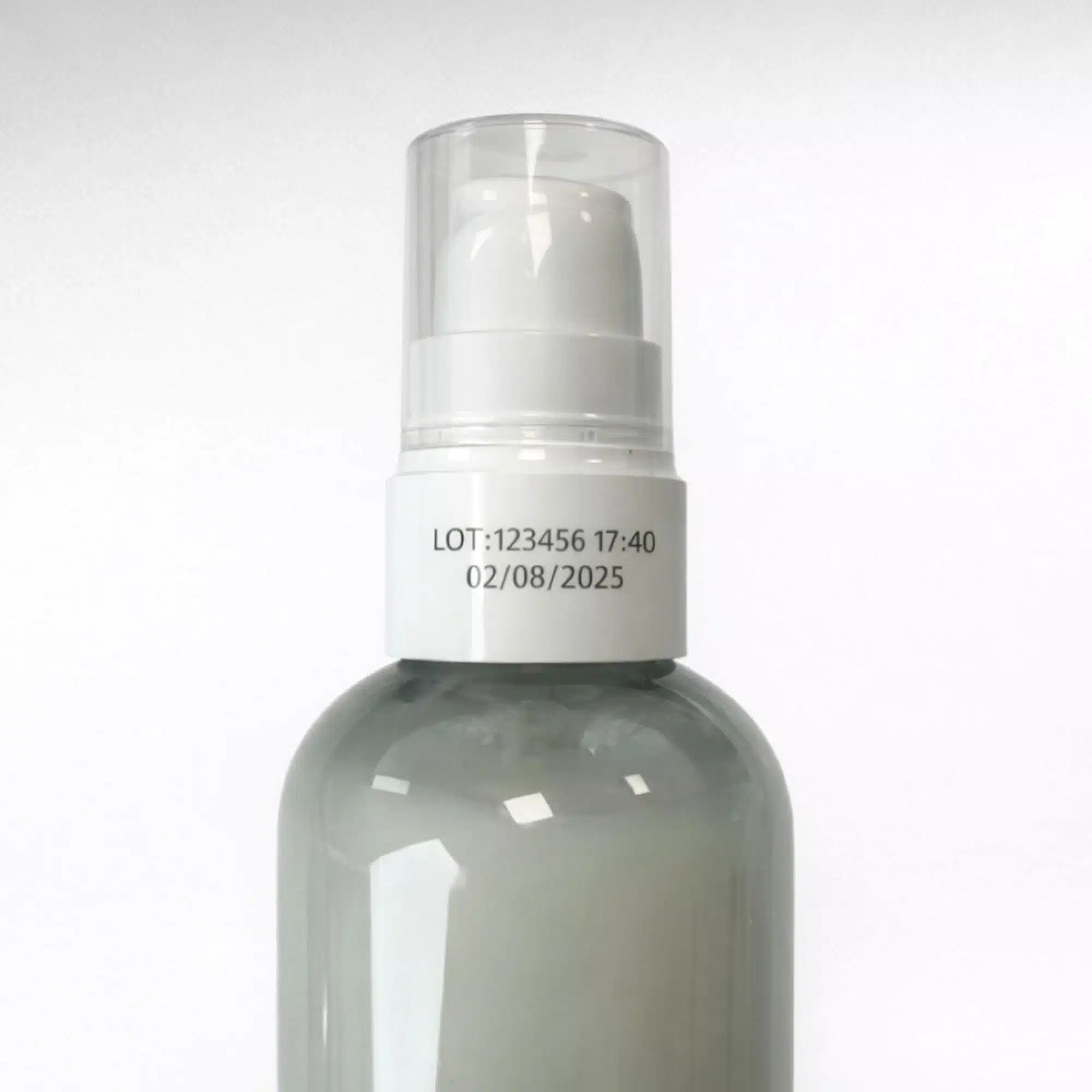
UDI compliant UV laser marking without material damage
In the medical and pharmaceutical industries, clear, durable markings are essential – from surgical instruments and implants to packaging. Unique Device Identification (UDI) requires manufacturers to mark medical devices with a unique, traceable code that remains uniquely identifiable throughout the supply chain. This marking must be permanently and reliably legible – a requirement that can often only be met with laser marking.
Request a free sample label on your original material now – for maximum security in your decision.
The advantages at a glance
High-contrast & precise marking
With a wavelength of only 355 nm, the UV laser enables pin-sharp, high-contrast markings – ideal for plastics, flexible films, pharmaceutical packaging and medical components.
UDI compliant & traceable
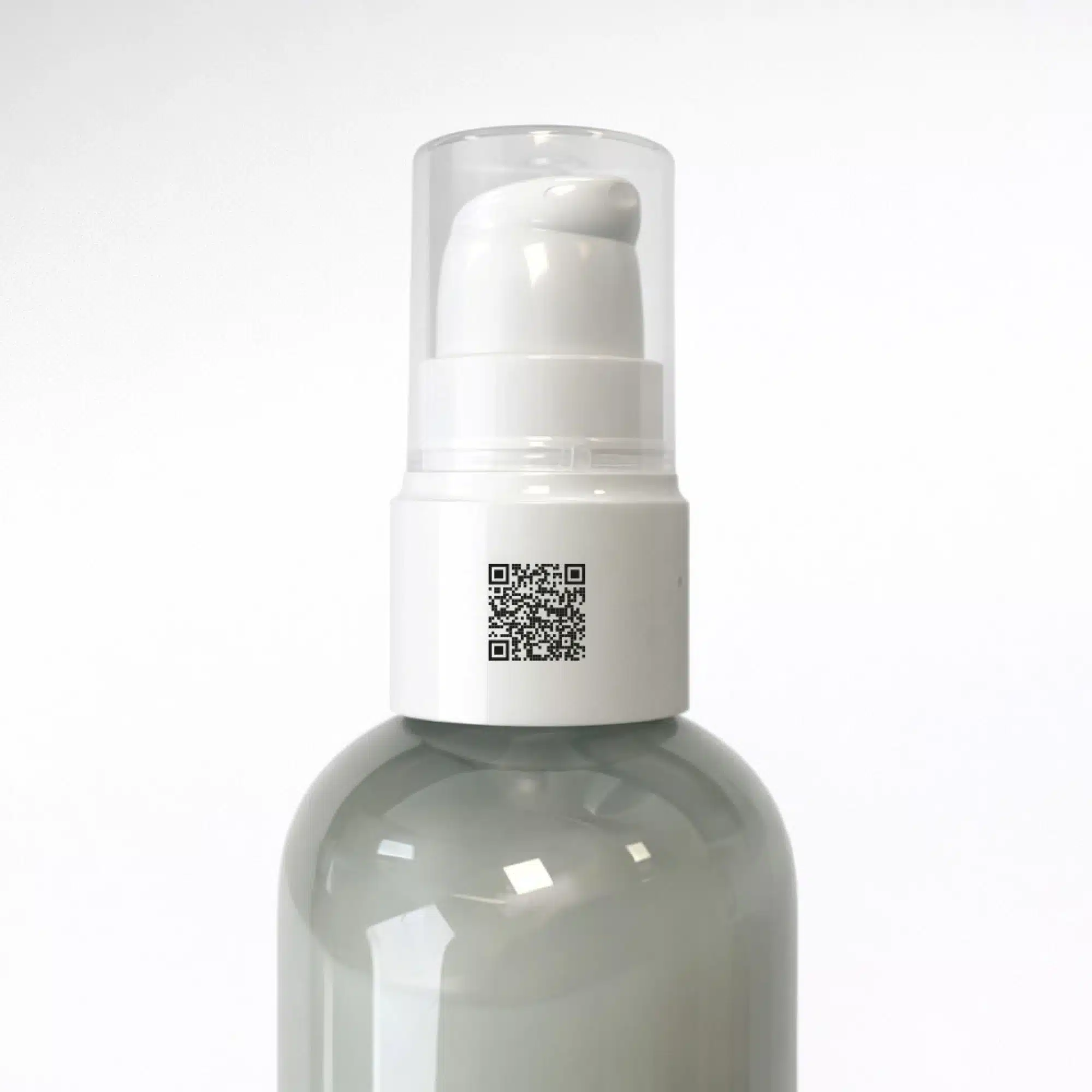
Thanks to its high precision, UV laser marking is ideal for the implementation of UDI codes. Medical devices remain clearly identifiable and traceable throughout their lifetime.
Reliable 24/7 operation
MPERIA® UV laser systems have a sealed laser source with minimal wear. They are designed for continuous operation and ensure high uptime with minimal maintenance.
Sustainable & emission-free
Without inkjet, chemicals or cooling gasses, the UV laser is not only environmentally friendly, but also clean and safe for sensitive production areas such as medical technology or food packaging.
Cold marking process
Due to the virtually non-existent thermal effect, no smoking marks, microcracks or deformations occur – even on extremely sensitive or delicate substrates.
OptiBeam™ Technology
The optional OptiBeam™ technology enables a marking field of up to 1000 x 1000 mm – without compromising on marking quality.
Ideal for cleanroom & pharmaceutical productions
Since no particles, fumes or waste are generated, the process is optimal for sensitive production
environments such as clean rooms, OR-proximity areas or pharmaceutical production lines.
Abrasion-resistant & durable markings
The laser marking is resistant to abrasion, cleaning and sterilization processes.
This means that it reliably meets the high quality
and durability requirements of the medical technology and pharmaceutical industries.
Reduced operating costs (TCO)
The elimination of consumables and the high system availability significantly reduce running costs. At the same time, unplanned downtime due to empty inks, clogged nozzles or material changes is avoided.
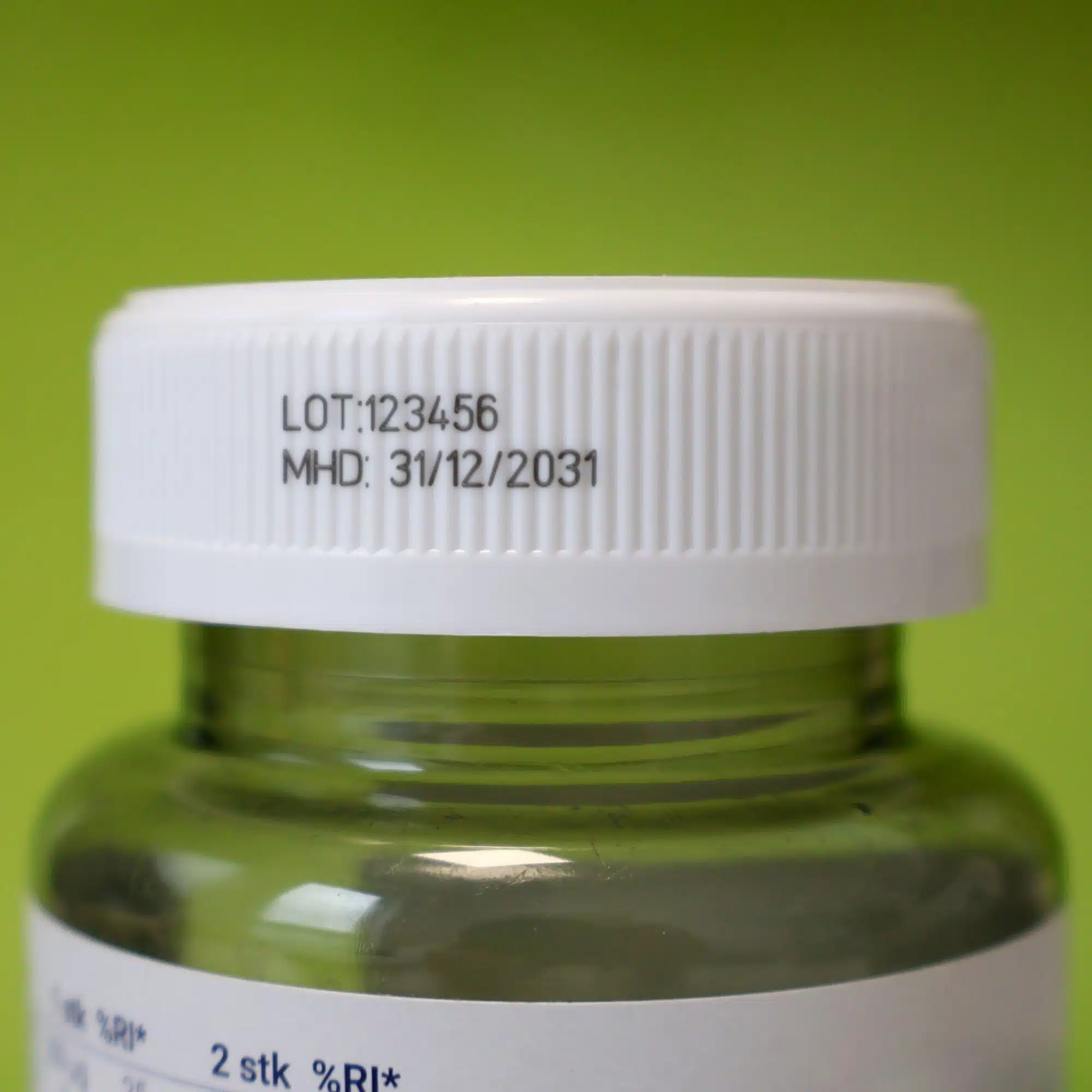
Challenges in medical and pharmaceutical labeling
Strict standards for product labeling
The medical technology and pharmaceutical industries have particularly stringent standards for product labeling. Patient safety and traceability are paramount. Instruments and devices must be clearly marked and still be identifiable after years – for example, to be able to read batch numbers, serial numbers, shelf life data or manufacturing information at any time. UDI codes (e.g. as a data matrix) are prescribed internationally for this purpose.
At the same time, many medical devices are difficult to label: Stainless steel surgical instruments must not lose their corrosion resistance due to the marking, flexible plastic catheters or blister packaging must not be deformed or damaged by heat under any circumstances. Traditional methods have their limits: Labels or inkjets may peel or fade in the sterile environment and cause contamination. Mechanical engraving, in turn, affects the surface and promotes corrosion. Conventional lasers (e.g. fiber or CO2 lasers) also often introduce too much heat, which can lead to smoking marks, cracks or melting points on thin films, encapsulations or electronic components.
Area of deployment
Difficulties:
- Surgical Instruments & Implants: Permanent direct marking of instruments and implants with UDI-compliant DataMatrix codes and plain text – biocompatible, easily legible and sterilization-resistant.
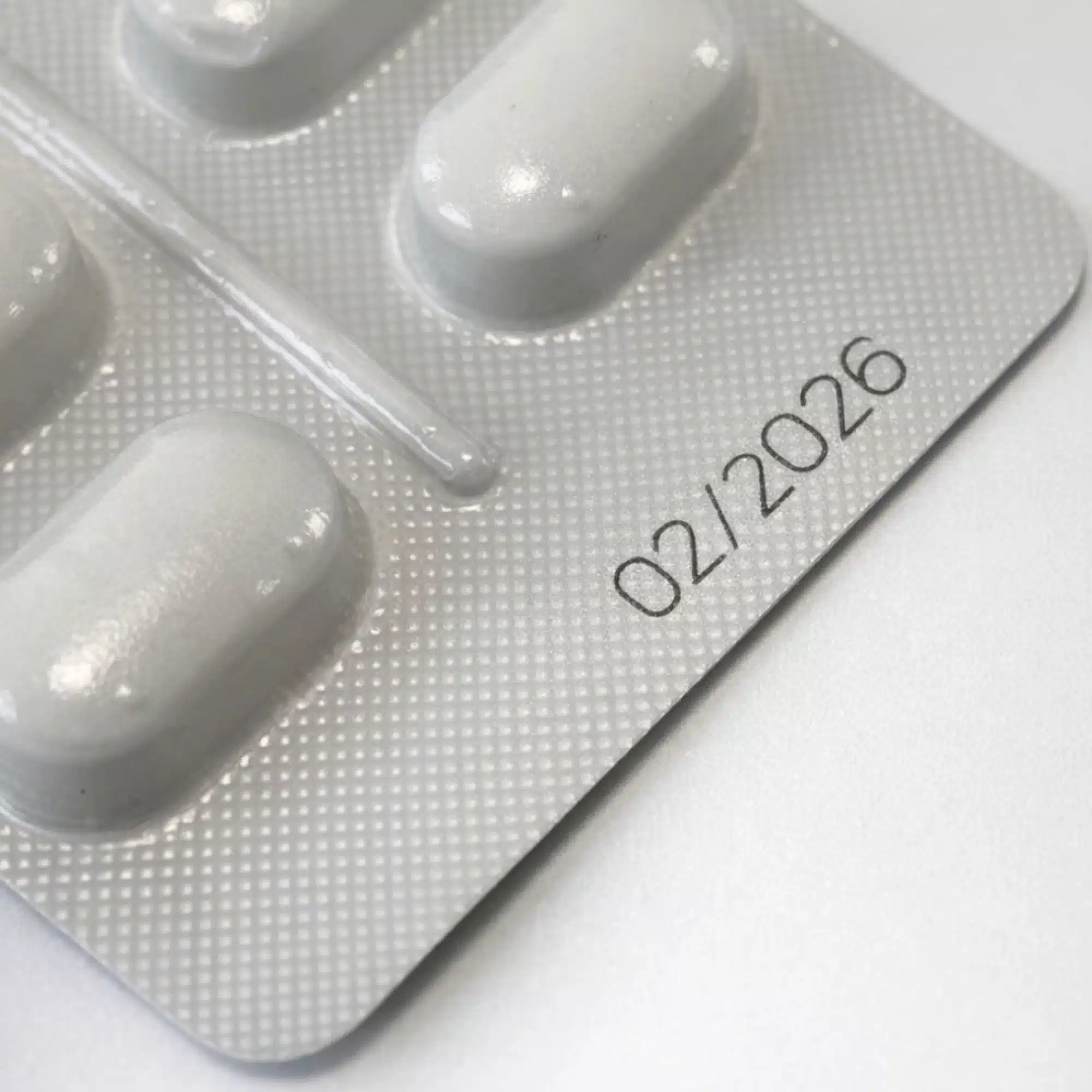
- Pharmaceutical primary & secondary packaging: Contactless labeling of blisters, syringes or vials with batch and expiry dates – without material damage, perforation or melting.
- Plastic parts & electronics in medical devices: Gentle UV laser marking of housings, cables, PCBs and sensors – high-contrast, permanent and without surface damage or additives.
Consequences
It requires a marking technology that achieves the highest resolution and durability, but without material stress and additives. This is precisely where the UV laser comes in as the ideal solution.
Sample Marking
We look forward to hearing from you
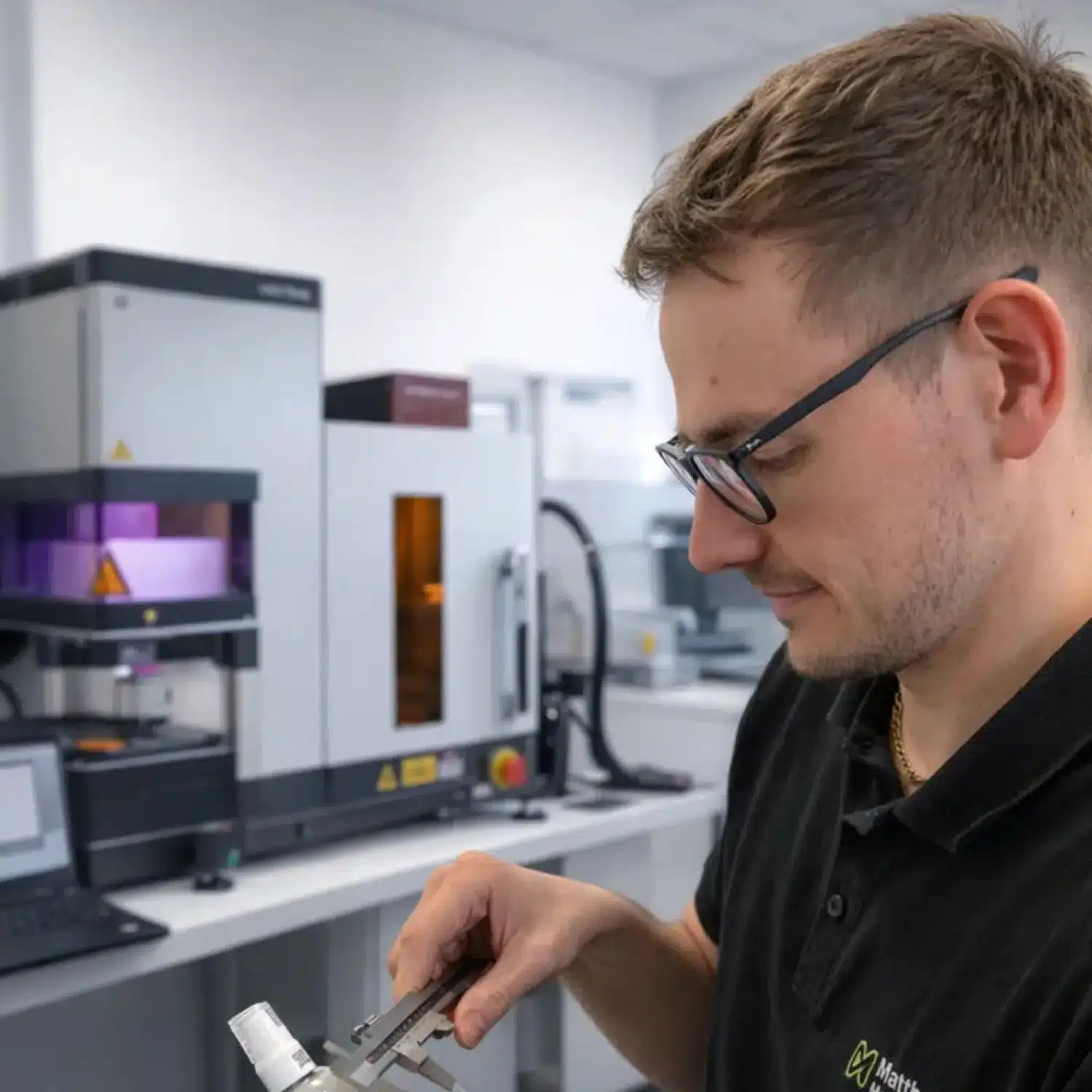
1. Contact & Initial Assessment: Tell us about your application, material, component, or packaging through our contact form. Our laser experts will review your requirements and evaluate feasibility. 2. Personal Feedback & Free Sample Marking: Within 24 hours, you'll receive an initial assessment or follow-up questions. If desired, we'll provide a free sample marking on your original material, including technical evaluation and optional readability testing. 3. Review & Next Steps: Together, we'll discuss suitable solutions, integration options, and the best next steps for your project.



Contact a Laser Expert
Our experts are available to assure that your next printing solution maximizes efficiency, enhances quality, and limits downtime. Contact us to get a quote, request samples, schedule a demonstration, or receive additional product information.